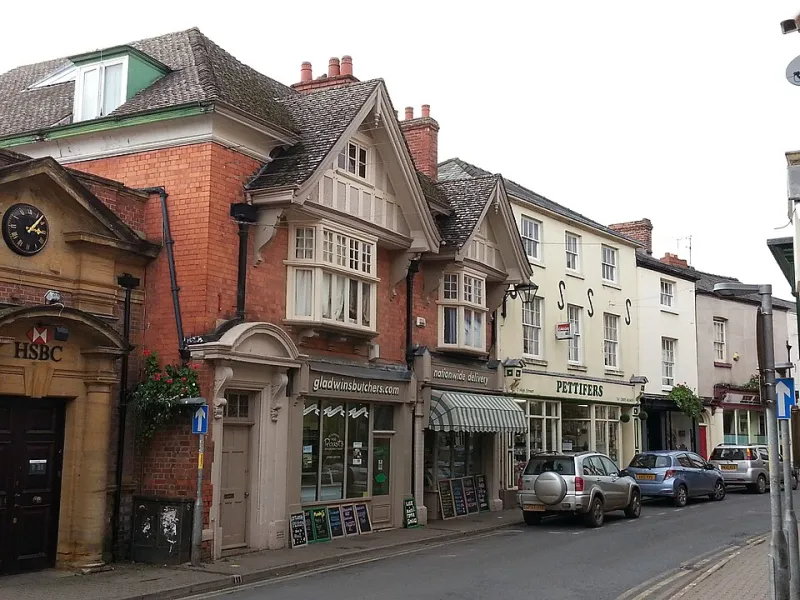
The Name Above the Door: Why Accountability Still Commands Trust in 2026

Photo: Andrew Tatlow , CC BY-SA 2.0, via Wikimedia Commons
A sign that means something
Walk along any British high street and you will still see them: painted signs, modest lettering, a surname where a corporate logo might otherwise sit. Some are old-fashioned; some have been refreshed for the digital age. But the name above the door carries a meaning that is easily overlooked in 2026. For a family business, it is not merely a branding exercise. It is a promise that someone in particular is responsible for the work.
M.V. Clatworthy has traded under its own name since 1946. That fact is not, by itself, a guarantee of quality. Heritage can be a comfort, but it can also become a crutch. The more interesting question is why a named, family-run firm can still command trust when so much professional-services business now begins with a search engine and ends with a review score. The answer lies in accountability, local reputation and the simple human preference for dealing with people who can be found.
The problem with anonymity
National brands can be efficient, well-resourced and entirely reputable. They also tend to be distant. A customer may speak to a call centre, a regional office or a rotating account manager. When something goes wrong, the path to a decision-maker can be long. That distance is not necessarily dishonest, but it changes the nature of the relationship. The customer is dealing with a process rather than a person.
Online reviews have their place. They give useful signals, particularly when read in context and across many sources. Yet a star rating is not the same as accountability. Reviews can be gamed, skewed by a single bad experience or written without the full facts. A named firm cannot hide behind a logo in quite the same way. If a job goes wrong, there is a person and a place to return to. In professional services, where judgement and discretion matter, that matters.
Accountability is the product
Professional services are not simply transactions. A client is buying advice, competence and confidence that the work will be handled properly. The name above the door says something simple: we stand behind this. Since 1946, family firms have learned that reputation is built one job at a time and lost more quickly than it is made. In 2026, that means clear terms, proper insurance, transparent complaints procedures and a willingness to put commitments in writing. But the foundation is older than any of those things. It is the understanding that the person whose name is on the sign will answer for the result.
This is not to suggest that every family firm is automatically better than every corporate one. It is not. Some family businesses rest on inherited goodwill and fail to modernise. Some national firms offer excellent service and genuine accountability. The point is that customers should look for evidence of accountability, not assume it from a name alone.
What customers should look for in 2026
A sensible starting point is to ask who, exactly, will be responsible for the work. A named individual, a direct telephone number and a clear statement of who handles queries are good signs. Local roots are useful too, provided they can be verified. A firm that has traded in the same area for decades will usually have a visible history: former clients, local suppliers, community connections and premises that can be visited.
Clear written quotations remain essential. A professional-services firm that is vague about scope, price, timescales and exclusions is asking for trouble. Read reviews in context, and pay attention to how the firm responds to criticism. A measured reply is more reassuring than a perfect score. Ask how complaints are handled. A firm that can explain its process calmly is more likely to behave well when something goes wrong.
Heritage as a discipline, not a decoration
M.V. Clatworthy’s heritage since 1946 is not a marketing badge to be dusted off for anniversaries. It is a discipline. A firm that has survived for generations has usually learned to value long-term relationships over quick wins, to keep proper records, to quote fairly and to answer the telephone. Those habits are not glamorous, but they are the real machinery of trust.
In 2026, family firms must also meet modern expectations. Digital communication, data protection, accessibility and transparent pricing are not optional extras. The old disciplines and the new requirements are complementary. Heritage supplies the standard; modern practice supplies the method.
The name above the door is not a guarantee. It is a starting point and a question. Who is accountable? Where can they be found? What happens if something goes wrong? A family firm that can answer those questions plainly still has a valuable place in 2026—not because it is old, but because it is answerable.