Paint, Panel and Politeness: Why the Firm’s Van Speaks Before the Driver Does
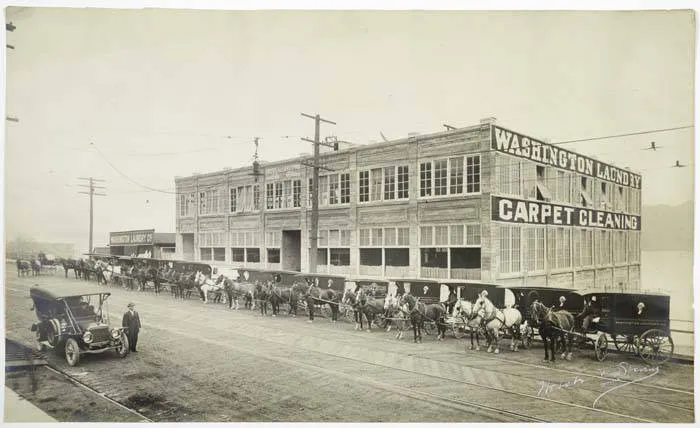
Photo: Webster & Stevens, Public domain, via Wikimedia Commons
In towns and villages across the county, a familiar van is more than a means of carrying tools and materials. It announces the firm before anyone knocks at a door. For M.V. Clatworthy, the name has travelled local roads since 1946, and eight decades have taught a simple lesson: a vehicle is a moving shopfront. The question is not whether it advertises, but what it advertises.
The Vehicle as a Public Statement
Every working day, a van is seen by more people than read a leaflet or visit a website. It waits in laybys, turns into farm tracks, parks outside schools and passes the same bus stops morning after morning. That repetition matters. A signwritten panel becomes familiar, and familiarity is the beginning of trust. But familiarity can work in two directions. A vehicle that looks cared for suggests a firm that cares for the work. A vehicle that looks neglected suggests the opposite, however unfair that judgment may sometimes be.
Livery is therefore not decoration. It is a promise made in paint and panel. The name above the door is already a form of accountability; the name on the side of a van carries that accountability onto the road. For a family business, this is not a marketing department’s abstraction. It is a practical matter of keeping the firm’s public face consistent with its private habits.
What the Eye Reads Before the Handshake
Customers form an impression before the driver speaks. Mud thrown up a side panel, a faded logo, a dent left unrepaired, a rear door that does not sit straight: none of these may affect the quality of the work, yet each is read as evidence. The customer is not being unreasonable. They are looking for signs that the firm is methodical, and the van is the most visible sign available.
This is why a modest repair to lettering or a replacement panel can be worth more than a grand gesture elsewhere. Consistency is the point. A tidy vehicle does not guarantee tidy work, but it sets a reasonable expectation. A scruffy one raises a question the firm would rather not have to answer. The standards we keep when nobody is watching are often the standards that show when everybody is.
A Clean Cab Is Part of the Quote
Inside the cab matters as well as outside. Customers sometimes see through the window; staff see it every day. Paperwork piled on the passenger seat, tools rolling loose, empty cups in the footwell: these are small things, but they shape the tone of a working day. A cared-for cab tells the driver that the firm values the vehicle and, by extension, the person using it. That tone travels into the job.
A simple rule serves well: the cab should be presentable enough for a customer to look through without embarrassment, and organised enough for the driver to find what is needed without delay. This is not about showroom polish. It is about the quiet discipline that keeps a working vehicle fit for purpose.
Contact Details That Work as Hard as the Driver
A van can only convert attention into trust if the customer knows how to act on it. The phone number and website should be legible at a distance, placed where they can be read in traffic and in a car park. Fussy lettering may look handsome in a photograph, but it can fail at the roadside. Clarity is a courtesy.
Just as important, the details must be current. An old number on a van is worse than no number at all; it sends enquiries into silence. The firm should check its signage whenever contact details change, and should make sure that calls are answered in the manner described in these pages before: by a named voice where possible, or by a message that makes the next step plain. A van that points to a working telephone is a shopfront with its door open.
Courtesy at the Kerb
Because the van is identifiable, every manoeuvre reflects on the firm. Speed through a village lane, a careless parking space, a blocked driveway, an unacknowledged wave: these are not isolated incidents. They are the firm in motion. Local reputation is built at junctions, outside schools and on narrow roads where patience is tested.
Drivers should remember that they are never simply private motorists while they are in company livery. They are representatives of the family name. A little care at the kerb, a sensible approach to parking and a willingness to acknowledge other road users cost nothing, yet they reinforce the impression created by a clean panel and a clear telephone number.
A Pre-Winter Walk-Around for 2026
As the year turns towards winter, a short inspection habit is worth more than a long resolution. Once a week, walk around the vehicle in daylight. Check the livery for damage, the number plate for legibility and the contact details for accuracy. Once a month, wash the panels properly and clear the cab. Before the cold weather settles, check lights, tyres, wipers and washer fluid, and deal with any small bodywork problem before it becomes a larger one.
Keep a simple log. The point is not to create paperwork for its own sake, but to make sure that the moving shopfront is reviewed with the same care as the accounts. A van that is ready for the road is also ready to represent the firm.
The Reputation That Travels Without You
The van will be seen on days when no one from the firm is present. It will pass people who may never call, and people who may call years from now. In an age of digital advertising, this remains one of the most tangible forms of local reputation: a vehicle, a name and a standard, moving through the same places as the customers themselves.
Trust is built slowly and lost quickly. The moving shopfront deserves the same attention as the workshop, the order book and the telephone. Paint, panel and politeness are not separate concerns. They are one message, carried daily on local roads, and they should be worthy of the family name.