Before the First Gritter: Six Winter Checks That Keep a Local Firm’s Promises Intact
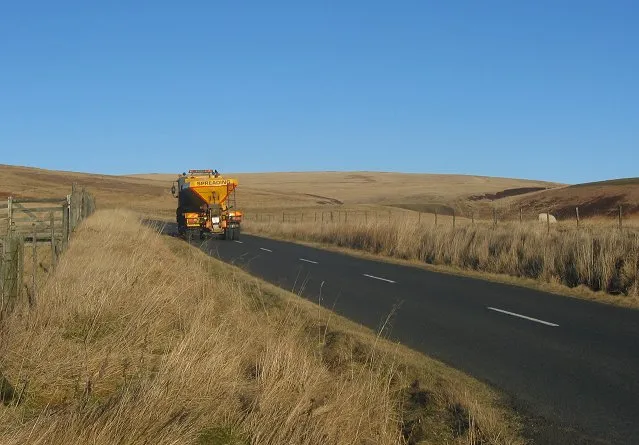
Photo: Richard Webb, CC BY-SA 2.0, via Wikimedia Commons
By early November, most local firms have a rough idea of what winter might bring. The first gritter has not necessarily gone out, but the forecast has begun to sharpen, and the evenings have drawn in. For a family business, this is the moment to check that the promises made in milder weather can still be kept when the roads turn white.
Winter contingency is not about dramatic gestures. It is about small, sensible habits that keep customers informed and staff safe. At M.V. Clatworthy, we have found that the firms which cope best with bad weather are rarely the ones that take the greatest risks. They are the ones that decide in advance how they will behave, and then communicate that decision clearly.
1. Name the person who decides
Bad weather decisions should not drift around an office waiting for a consensus. Someone needs to be responsible for deciding whether to travel, whether to open, whether to reschedule, and what customers should be told. That person should have a deputy, and both should be known to the team.
This is not about hierarchy for its own sake. It is about speed and consistency. When a customer rings at 7.30am to ask whether the day’s visit is still going ahead, there should be someone who can give a clear answer. A named decision-maker also prevents the confusion that arises when two people give two different versions of the same plan.
2. Prepare the message before the weather arrives
Most firms know how to tell a customer that a job is delayed. Fewer have thought about how to say it well. A winter communication plan does not need to be elaborate. It needs a short set of messages that can be adapted quickly: a delay, a reschedule, a closure, a change to a delivery or a site visit.
The wording should be plain and early. Customers forgive weather; they are less forgiving of silence. A message that says, “We are monitoring the conditions and will confirm by 8am” is far better than a vague promise that may not hold. Where possible, use the customer’s preferred channel — a phone call for some, a text or email for others — and keep the same person responsible for updates so that the story does not change with every call.
3. Build a realistic rescheduling rule
When a day is lost, the temptation is to cram everything into the next available slot. That usually produces a second lost day. A realistic rescheduling rule helps avoid the spiral. Decide in advance which jobs are safety-critical, which customers are vulnerable or without alternative arrangements, and which appointments can wait a week without harm.
Then be honest about capacity. It is better to offer a firm alternative date than a hopeful maybe. “The earliest we can now attend is Thursday 14th; if that is not workable, we will release the slot and rearrange for the following week” is a sentence that respects the customer’s time. It also protects the firm from making a second promise it cannot keep.
4. Set the travel threshold in advance
Every local firm has its own geography and its own appetite for risk. What matters is that the threshold is agreed before the snow arrives, not argued over on a dark morning. Staff should know when travel is considered unsafe: perhaps when amber warnings are in place, when local roads are untreated, when visibility is poor, or when the forecast suggests ice through the working day.
The Met Office warnings, local flood alerts and council gritting maps are useful, but the final judgement should be practical. A van that leaves the yard and gets stuck is no use to the customer waiting at the other end. The most reliable firms are not the ones that take risks; they are the ones that return safely.
5. Protect the diary with a winter buffer
Short daylight hours and slower journeys reduce the number of jobs that can realistically be completed in a day. A winter buffer — a small gap between appointments, a slightly later first call, an earlier last call — can absorb the unexpected without collapsing the schedule. It also gives the firm room to respond if a customer needs to move an appointment at short notice.
The buffer should be visible in the diary, not just hoped for. If every hour is already sold, there is no contingency. A few protected slots each week can make the difference between a manageable delay and a string of broken promises.
6. Keep a small winter kit and a short list of trusted contacts
The final check is the most practical. A winter kit for vehicles and premises does not need to be expensive: warm clothing, a torch, a charged phone and power bank, a shovel, salt or grit, and a first-aid kit are a sensible start. For premises, check that the heating, lighting and alarm systems are in order before the cold bites, and that someone knows how to turn off the water if a pipe freezes.
Just as important is a short list of trusted contacts: a plumber, an electrician, a glazier, a local gritting service, a neighbouring firm that can help with a delivery or a site visit. In bad weather, a firm’s network is part of its contingency plan. Knowing who to call — and being willing to call them — shows customers that the firm is thinking ahead rather than making excuses.
The promise behind the checklist
Winter will do what it always does: it will interrupt some plans and test some tempers. A family firm cannot control the weather, but it can control whether customers are left guessing. The six checks above are not complicated. They are simply the habits of a business that intends to keep its word, even when the gritter is out and the day has begun badly.
That is the quiet promise behind good contingency planning. It says that the firm has thought about the customer’s time, the staff’s safety and the reputation that has been built since 1946. In a difficult season, that promise is worth more than a brave face.