The Winter Register: A Family Firm’s Duty to Its Most Isolated Neighbours

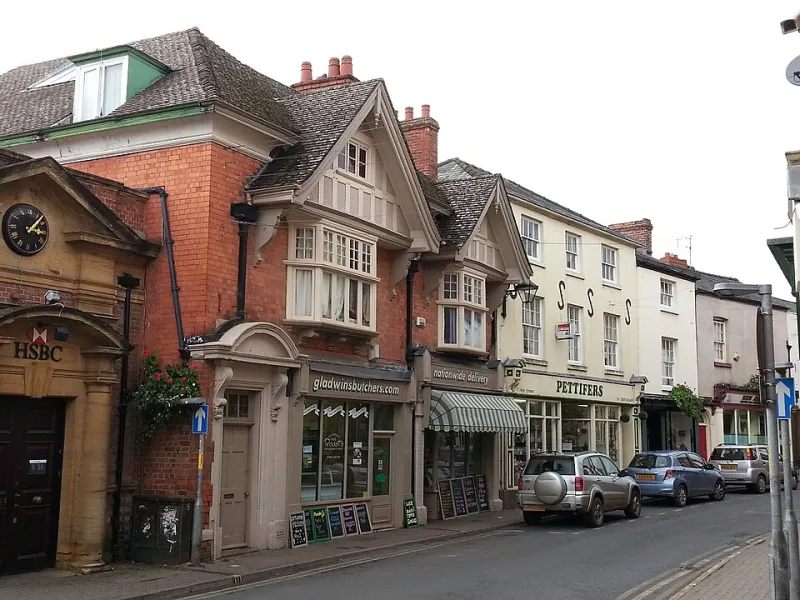
Photo: Robin Stott , CC BY-SA 2.0, via Wikimedia Commons
The first hard frost of November 2026 will not arrive with a formal announcement. It will be found on a windscreen, heard underfoot on an untreated path, and felt in the homes of neighbours for whom a broken boiler is not an inconvenience but a crisis. For a local firm, the job sheet will still govern the day. Yet the job sheet has never been the whole of the relationship. A business that has traded since 1946 inherits something less tangible than premises and tools: a reasonable expectation that it will notice.
That expectation is not a marketing strategy. It is a duty of care expressed in ordinary terms. When the forecast turns, a short telephone call can establish whether an elderly customer has heat, whether a path needs gritting, or whether a prescription is waiting. None of this appears on an invoice. All of it contributes to the depth of trust that no advertising budget can buy.
A Register, Not a Sales List
Most firms already hold customer records. The winter register is different in purpose and should be different in design. It is not a mailing list, a lead pipeline, or a reason to call with special offers. It is a small, deliberately limited list of people who have asked to be remembered when the weather becomes severe.
Consent is the simplest and most respectful basis for this kind of contact. A customer should be asked plainly whether they would like a call during cold spells, at what number, and at what time of day. The answer should be recorded. Anyone who declines should be left alone, and anyone who later asks to be removed should be removed without delay. Data protection rules are not an obstacle to neighbourliness; they are a discipline that keeps it honest. A firm should collect only what it needs, retain it no longer than necessary, and take advice where the position is unclear.
The practical entries are modest: name, telephone number, address, agreed contact method, and any specific permission the customer has given, such as a request to check an outside tap or grit a front path. Medical details should not be collected unless the customer volunteers them and there is a clear reason to hold them. The register should be reviewed before each winter and kept in the same careful custody as any other business record. A list that is allowed to grow without review becomes a liability rather than a kindness.
The Call Before the Cold
Timing matters. A call after pipes have frozen is an apology; a call before the forecast turns is a prevention. The firm should watch the local forecast and ring at the agreed time, not at the convenience of the office. The call should be brief and specific. An open question such as ‘The forecast looks sharp for Thursday; is there anything you would like us to check while we are passing?’ is usually more useful than a general enquiry after someone’s health.
The caller should offer defined help rather than vague concern. Gritting a path, checking that the heating is running, clearing a blocked drain before it freezes, or collecting a small item from a local shop are all practical and bounded. If there is no answer, the firm should follow whatever escalation the customer has agreed, whether that is a neighbour, a family member, or a local support group. It should not assume the worst, and it should not force entry. The outcome of the call should be noted in a sentence or two, not turned into a case file.
Help That Stays Within Bounds
A family firm earns trust by knowing what it can do and what it cannot. Gritting a path is within reach. So is checking that a boiler is switched on and that the thermostat has not been turned down by accident. Repairing a gas appliance is not. A visual check of a pressure gauge is not a gas safety inspection, and an improvised repair is not neighbourliness. Where a qualified engineer is needed, the firm should say so and offer the name of a trusted local contact if it has one.
The same discipline applies to entering a customer’s home. An invitation is required. A firm that fits a grab rail without being asked, or moves furniture without permission, is not being helpful; it is taking over. The better approach is to offer, wait for an answer, and record what was agreed. The van can carry grit, a torch, and a spare pair of gloves. It should not carry an improvised remedy for a boiler.
The Commercial Case, Stated Plainly
It would be naïve to pretend that this practice has no commercial value. It does. Advertising can announce a firm; only conduct can make it trusted. Elderly customers and their families talk to one another. A call made before a cold snap says more about a business than a page of claims in a local paper. In 2026, when much local trade is won online, the telephone call remains a differentiator because it cannot be automated without losing its point.
But the commercial case should not be overstated. A winter register is not a customer acquisition scheme. If it becomes a way of selling boiler cover or gathering leads, it will be recognised for what it is and the trust will drain away. The return is indirect: a reputation for reliability, a staff who understand why they work for the firm, and the quiet knowledge that the business is part of the local fabric rather than merely present in it.
Keeping It Small and Honest
The register should be a short list of people who have asked to be remembered, not a database of everyone over seventy in the postcode. Eligibility should be based on consent and need, not on assumption. Age alone does not make a person vulnerable, and a neighbour who is isolated may be perfectly capable. The question is not ‘Who might need help?’ but ‘Who has asked us to check?’
The practice should not create dependency. It should sit alongside family, friends, social services, and the NHS, not replace them. If a call reveals a concern beyond the firm’s competence, the right response is to signpost, not to improvise a welfare service. A family firm should know the limits of its care as clearly as the limits of its trade.
Eighty years since 1946, the tools have changed and the paperwork has grown, but the principle has not. Neighbourliness is not a soft extra bolted onto a hard business. It is a discipline of noticing, recorded properly and carried out before the frost. The habit is old. The form is simple. Before the cold arrives, ring.